Stack Dyno
Reseller PortalFinOps AgentCloud Map

sign in

Back to blog
Dec 16, 2025

White-label FinOps automation every reseller can ship in a week

A simple sequence to launch branded reports, alerts, and savings pipelines without another project plan.
Automation
Reporting
Resellers
White-label FinOps automation every reseller can ship in a week

Customers buy outcomes, not dashboards. A white-labeled FinOps experience makes your services feel productized, reliable, and worth renewing. Here is a week-long sequence that resellers run with Stack Dyno to launch automation without piling on headcount.

Day 1: brand the experience

Branding is the first signal that your FinOps program is productized, not ad hoc.

  • Swap logos, colors, and typography so the Stack Dyno interface matches your visual identity.
  • Set up custom domains and SSO so customer teams log in without a new identity flow.
  • Create a homepage tile for each customer with their spend trend and owner to reduce “where do I click?” moments.

Day 2: connect the data pipes

The second day is all about trust. Clean data and labeled ownership make every later report believable.

  • Point Stack Dyno at fresh billing exports and Kubernetes allocation feeds.
  • Map owners, environments, and margin tiers with lookup tables so every view speaks your customer’s language.
  • Verify ingestion freshness with a daily alert that pings Slack if data lags.

Day 3: publish proactive savings

Nothing builds credibility faster than showing the first few optimizations in motion.

  • Turn on the optimization backlog for rightsizing, storage lifecycle, and commitment coverage.
  • Assign owners and due dates to the top five items for each customer to show momentum immediately.
  • Use the spending flow view to explain where savings will land and how it affects shared services.

Day 4: automate communications

Automation prevents “who owns this update?” debates. Make the cadence predictable so teams check less and trust more.

  • Schedule weekly executive summaries with top variances, savings shipped, and next actions.
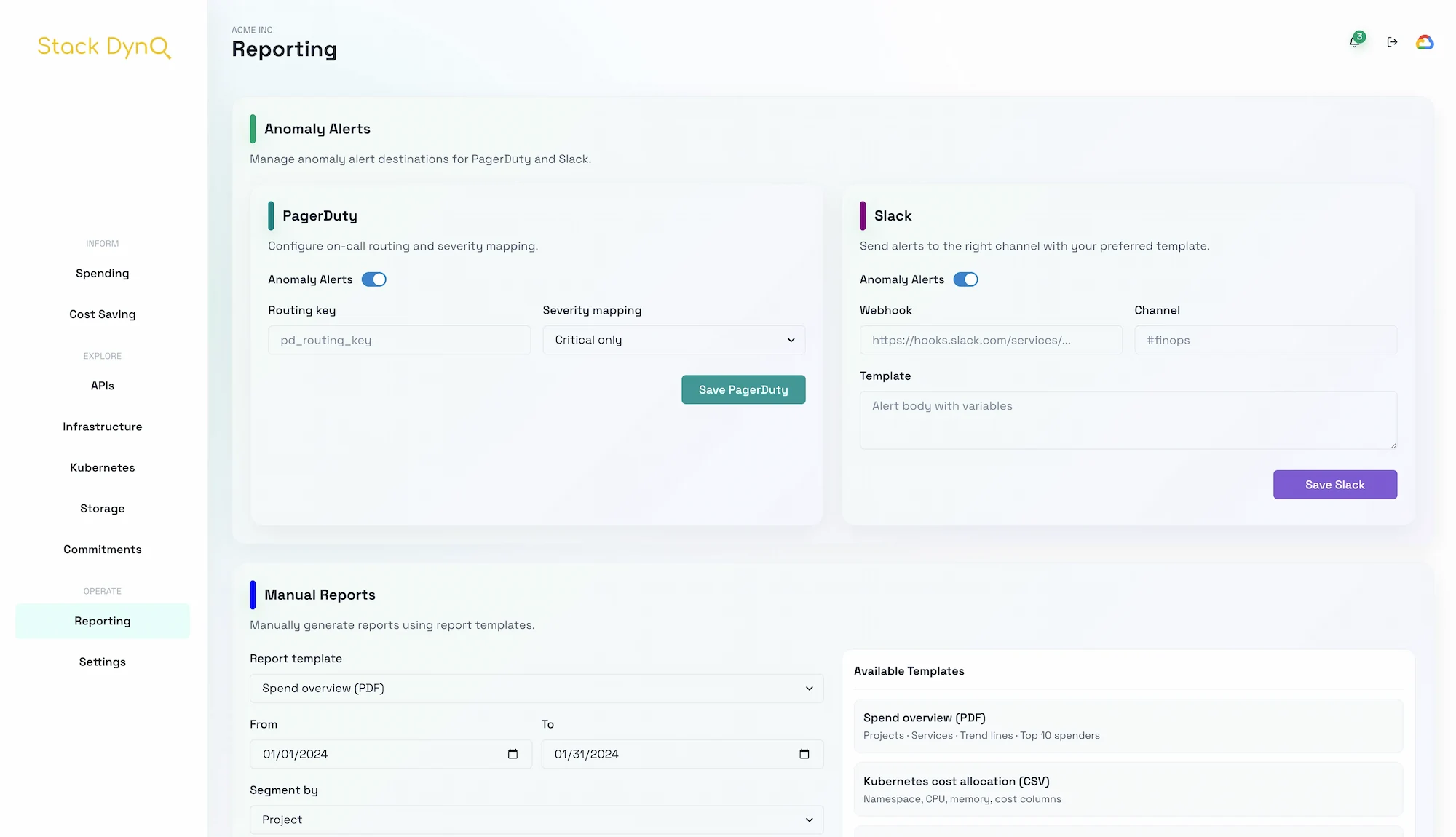
  • Route anomalies to PagerDuty and Slack with the customer name, project, and recommended fix attached.
  • Enable branded PDFs/CSVs for finance partners who prefer email over live dashboards.
import { scheduleReport } from "./sdk";

await scheduleReport({
	template: "executive-summary",
	cadence: "weekly",
	recipients: ["finops@customer.com", "cto@customer.com"],
	brand: { logo: "/img/customer/logo.png", primaryColor: "#003366" },
	filters: { customer: "Acme Co", environments: ["prod", "stage"] },
});

Day 5: measure adoption and iterate

The fifth day is a feedback loop. Keep what works, retire what doesn’t, and show teams that their responses change the program.

  • Track open rates, click-through, and accepted optimization items across channels.
  • Run a short survey with account teams: did alerts reach the right people, and were next steps clear?
  • Adjust cadence and routing based on customer preferences; keep the content concise and action-first.

White-labeling should not be another project. Stack Dyno keeps branding, routing, and reporting in one place so you can deliver FinOps as a product and keep every customer feeling seen.


Thanks for reading. Share feedback or ask for deeper dives on any topic.

View Stack Dyno