Stack Dyno
Reseller PortalFinOps AgentCloud Map

sign in

Back to blog
Dec 2, 2025

Storage lifecycle audit your finance team will appreciate

Reduce silent GCS creep with a quick audit and lifecycle fixes captured in Stack Dyno.
Storage
GCS
Optimization
Storage lifecycle audit your finance team will appreciate

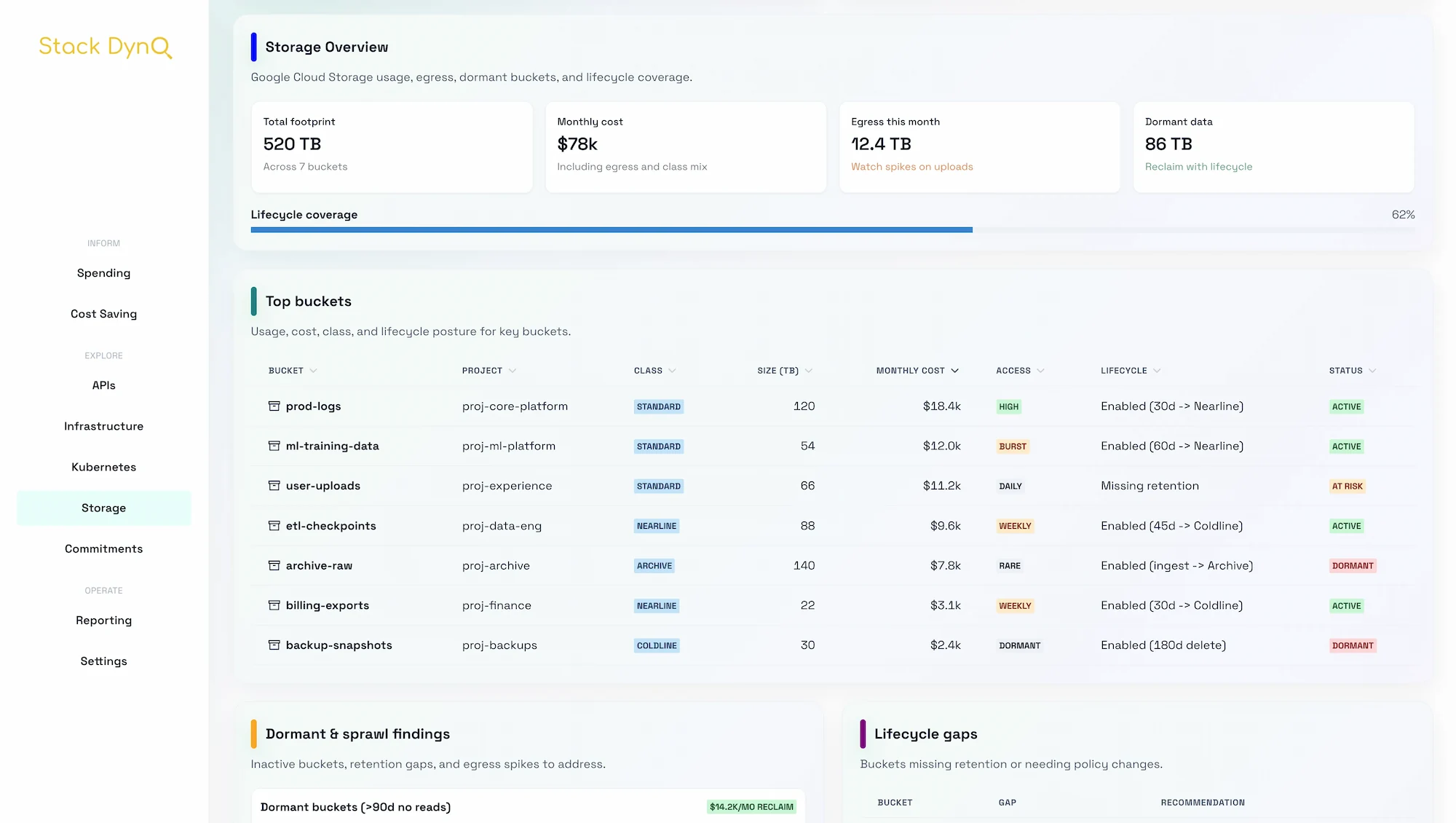
Storage spend rarely explodes overnight; it creeps. A focused audit surfaces dormant buckets, egress surprises, and lifecycle gaps before invoices swell.

Signals that indicate storage risk

Look for quiet culprits first. Storage waste hides in places nobody checks daily.

  • Buckets with no reads or writes for 90+ days.
  • Multi-region buckets used for archival data.
  • High egress on replication jobs that are not business critical.
  • Missing lifecycle rules for log archives or backups.

Fast audit workflow in Stack Dyno

An audit should take hours, not weeks. Keep it structured and repeatable.

  • Use the storage management view to sort buckets by growth and access frequency.
  • Tag buckets by customer and data class so the right teams own each fix.
  • Generate an optimization queue: lifecycle rules, compression, and replication changes.
  • Schedule follow-up alerts to confirm lifecycle actions actually reduced spend.

Communicating outcomes

Close with a narrative, not just charts. Finance and engineering both want to know what changed and why.

  • Send a weekly storage summary to finance: top risky buckets, actions taken, and expected savings.
  • Capture before/after storage trends in Stack Dyno and link to change tickets.
  • Keep a living document of lifecycle standards and share it with new projects.

A small audit can free surprising dollars. Stack Dyno gives the visibility, owner mapping, and reporting to keep storage creep from eroding margins silently.


Thanks for reading. Share feedback or ask for deeper dives on any topic.

View Stack Dyno