A practical approach to sizing CUDs and flex slots with room for customer growth.
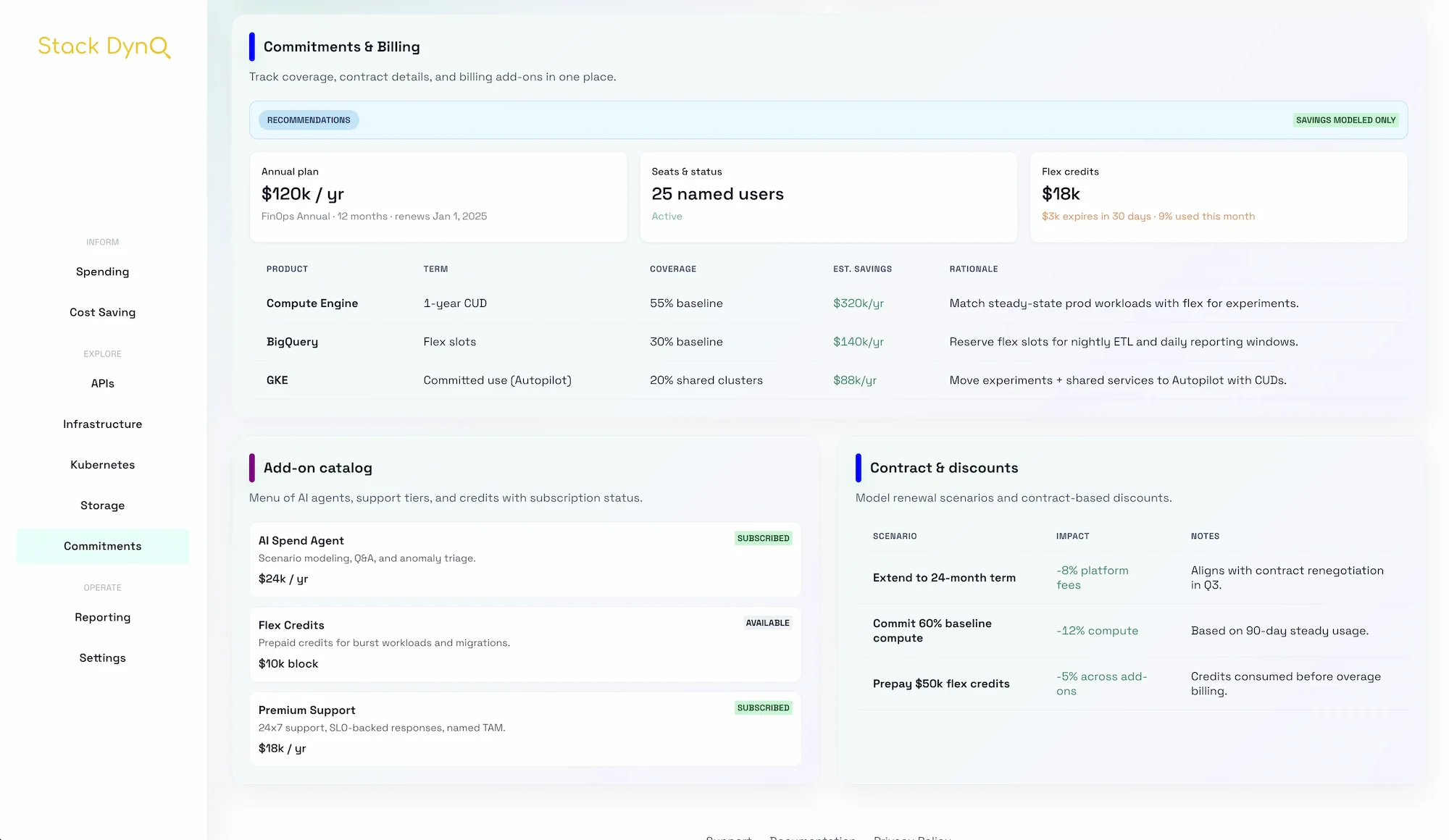
Commitments are only scary when you sign them in the dark. A clear view of historical usage, near-term pipeline, and customer seasonality makes Google Cloud CUDs and flex slots feel like a repeatable FinOps motion instead of a gamble.
Treat the discovery phase like a short due diligence cycle. A few specific artifacts make every later scenario discussion easier:
Run scenarios like you would A/B tests. You want a clear control group and a couple of bold variants, then a narrative for finance about why each path makes sense.
import { modelCommitments } from './sdk';
const scenarios = [
{ name: 'steady', cudCoverage: 0.55, flexSlots: 0.1 },
{ name: 'growth', cudCoverage: 0.65, flexSlots: 0.2 },
{ name: 'aggressive', cudCoverage: 0.75, flexSlots: 0.25 },
];
async function compareCoverage() {
const comparison = await modelCommitments({
billingAccount: 'XXXX-YYYY-ZZZZ',
horizonMonths: 12,
scenarios,
});
return comparison.map((scenario) => ({
name: scenario.name,
projectedSavings: scenario.savingsUsd,
breakEvenMonth: scenario.breakEvenMonth,
downsideRisk: scenario.downsideRiskUsd,
}));
}
Guardrails should feel like bumpers, not brakes. They protect the business while leaving room for growth.
Commitment management is calmer when everyone works from the same source of truth.
When finance, sales, and platform teams can see the same scenarios, commitments stop feeling like a bet. Stack Dyno keeps the data fresh, the alerts routed, and the reporting consistent so you can sign coverage with confidence.
Thanks for reading. Share feedback or ask for deeper dives on any topic.
View Stack Dyno